Aeron, Leap, and Fern all arrive in the same premium-chair conversation, but they ask you to make different kinds of decisions. Aeron fixes the seat to an A, B, or C frame. Leap and Fern let the seat pan slide within one frame. That difference determines whether you need to choose your geometry at checkout or can tune it later.
Published dimensions can prevent a wasted order or showroom visit. They are less useful for predicting pressure, recline feel, or how a backrest will feel after an afternoon. Use them to eliminate obvious mismatches, then use the sit test for what specifications cannot answer.
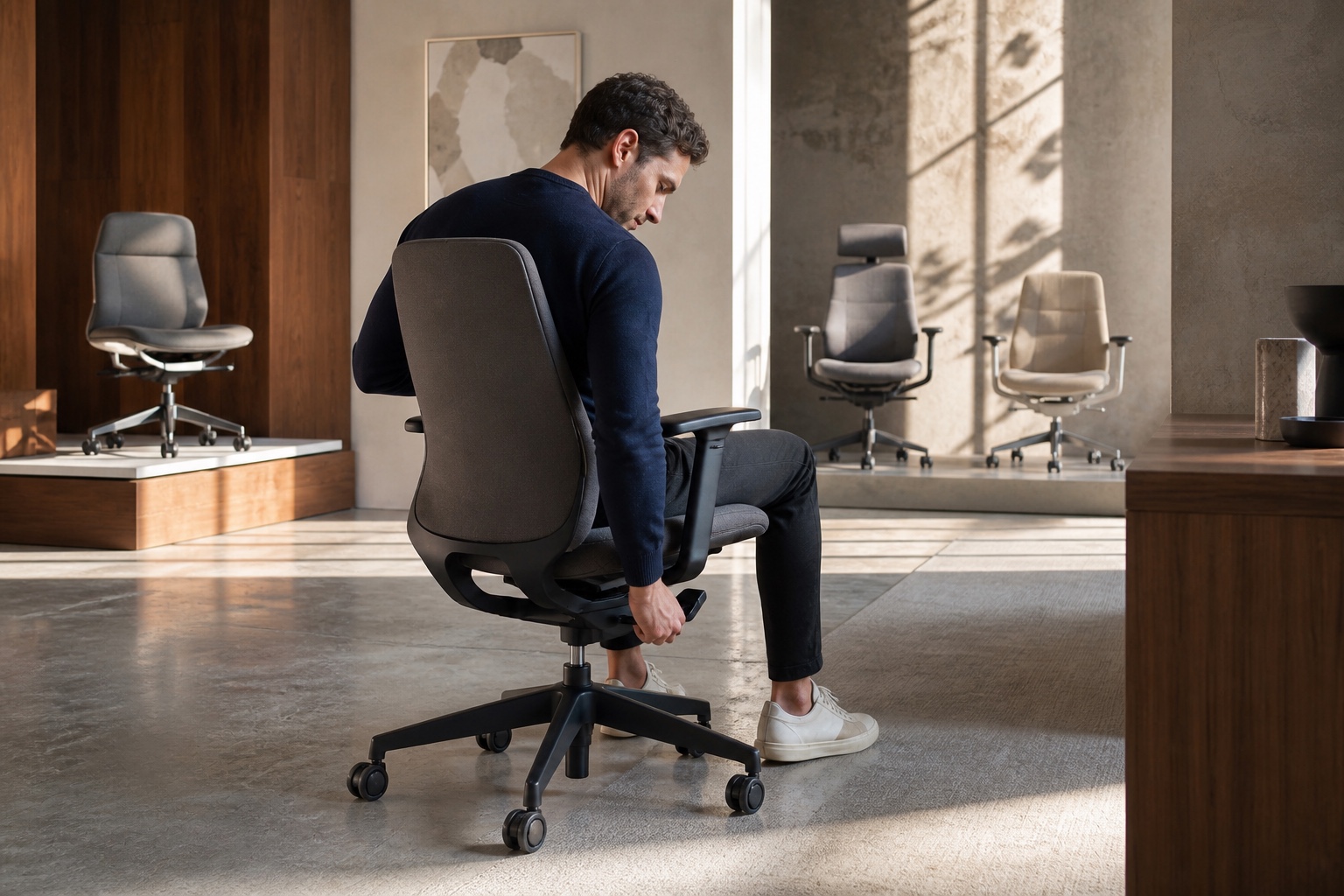
Which measurements can rule out a chair before you sit in it?
Start with the seat pan. OSHA’s workstation purchasing guide treats seat height and usable seat depth as fit questions, and recommends trying a chair for comfort and fit over an extended period before purchase. In this comparison, seat depth is especially revealing because only two of the chairs let you change it after delivery.
The next measurement belongs to the desk. Armrests that support a typing position but collide with the work surface create a choice between lowering the arms and raising the seat. The chair’s minimum height, the height of its arms, and the clearance below the desk therefore need to work as one system.
| Model | Seat depth | Seat height | The purchase-changing difference |
|---|---|---|---|
| Herman Miller Aeron | 16 / 17 / 18.5 in, fixed by A / B / C frame | A: 14.4–19.3 in B: 14.8–22.8 in C: 15.8–22.8 in | The frame size settles the seat geometry before delivery. |
| Steelcase Leap | 15.75–18.75 in, adjustable | 15.5–20.5 in | One frame covers three inches of seat depth and a broad arm range. |
| Haworth Fern | 15.5–18.5 in, adjustable | 16.5–21.5 in | The adjustable depth resembles Leap, while the minimum height starts one inch higher. |
These ranges can remove an option, but they cannot choose a chair alone. A frame edge can be noticeable even when the listed depth looks right. A flexible back can still feel too active or too firm. Dimensions narrow the room; the next sections decide which chair deserves the first test.
Aeron turns seat depth into a size choice
Herman Miller publishes three separate Aeron frames. Size A has a 16-inch seat depth, B has 17 inches, and C has 18.5 inches. The seat height changes with the frame too: A begins at 14.4 inches, B at 14.8, and C at 15.8.
This is more consequential than choosing a finish. If a B-size seat reaches too close to the back of your knees, no control will shorten it; A is the next useful test. If C is the only depth that gives the support you want, its higher minimum seat height becomes part of the same decision. For a chair shared by people who need different seat depths, the fixed frame asks more of the initial sizing appointment.
Aeron also differs at the surface. Its published specification describes a suspension seat and back rather than the upholstered seat used by Leap and Fern. Let the showroom answer whether that surface feels cooler or more comfortable to you. During the test, pay attention to the front and side frame, then recline far enough to find out whether the suspension continues to feel natural away from an upright typing position.
The useful Aeron comparison includes its option package. Herman Miller lists stationary, height-adjustable, and fully adjustable arms, several lumbar choices, and different tilt packages. Match the showroom chair to the order by frame, arms, lumbar support, and tilt.
Leap lets you revisit seat depth and arm fit
Leap keeps the frame and moves the seat. The current Steelcase seating specification guide lists a 15.75–18.75-inch seat-depth range and a 15.5–20.5-inch seat-height range. That three-inch depth adjustment makes the chair easier to revisit when the user, desk, or shared-work setup changes.
Its arms create the other meaningful difference. The Leap brochure gives a 12.75–20-inch range between the fully adjustable arms. The current product page lists armless, height-adjustable, and height/depth/width/pivot-adjustable versions, so the range belongs to a specific arm package rather than every Leap carrying the same hardware.
That distinction matters most when the desk is already known. Wide movement can bring the pads inward for typing, then outward or down to clear a work surface. The range also gives a shared chair more room to accommodate different users. The upholstered seat and separate lumbar, lower-back firmness, and recline controls still need hands-on time. Set each one, return to a normal working position, and judge the position you can actually maintain.
Fern starts one inch higher than Leap. Will your desk notice?
Fern’s current US product page publishes 15.5–18.5 inches of adjustable seat depth, almost the same span as Leap. Its seat-height range is 16.5–21.5 inches, however, and the listed distance between the arms is 15.1–19.8 inches.
That 16.5-inch minimum deserves attention before the backrest does. A low work surface can force the seat down so the armrests clear, while the higher starting point can leave a shorter leg position dependent on foot support. If those relationships already work at your desk, Fern remains a credible test. If they do not, the backrest cannot solve the mismatch.
Fern pairs a padded, depth-adjustable seat with Haworth’s flexible Wave Suspension back. It is neither Aeron’s framed suspension seat nor Leap’s upholstered back structure. This is the part to experience in person: move from upright work to recline and notice how the upper back, lumbar area, and seat interact. Manufacturer descriptions can identify the mechanism; they cannot choose the pressure or movement you prefer.
About $1,180 to $2,685: compare the configuration, not the badge
Price spreads quickly once arms, tilt, lumbar support, upholstery, casters, and finishes enter the configurator. On August 19, 2026, the official US pages showed these examples before treating short-term promotions as permanent prices:
- The Aeron store collection listed the chair from $1,620 to $2,685 before the displayed promotion, depending on configuration.
- The Steelcase store showed $2,167 for the opened Leap configuration: Café Leather upholstery, black frame, and carpet casters. Other materials and options change that number.
- The Fern overview listed the line as starting at $1,180.
The price gap reflects different surfaces and option packages as much as the names on the chairs. Aeron’s total changes with its frame and support choices; Leap’s value is tied to the exact arm and back-control package; Fern’s starting price changes with the surface and options. Compare the delivered configuration line by line before comparing totals.
Used and remanufactured Aeron and Leap chairs form a different purchase. Model generation, replaced cylinders or pads, seller warranty, return shipping, and wear can matter more than the original list price. Treat a used candidate as a seller-specific inspection rather than a discounted version of the new configuration above.
Choose the first sit test from the risk you cannot measure online
The best first appointment is the chair with the most important unresolved question.
- Start with Aeron when the suspension surface is the attraction and one frame appears to match. Confirm the A, B, or C size, then look for contact at the front and sides of the seat while upright and reclined.
- Start with Leap when seat-depth range, arm movement, or sharing the chair matters most. Set the seat and fully adjustable arms for the real desk position before judging the back controls.
- Start with Fern when its 16.5-inch minimum height works with the desk and you want to experience the flexible back. Test upright work and recline rather than deciding from the backrest’s appearance.
OSHA’s guidance favors an extended comfort-and-fit trial over a quick impression. Use that time to answer the unresolved question for the chair, then keep or remove it from the shortlist. By the end, the decision should be smaller: an exact Aeron frame, a Leap arm and back package, or a Fern configuration whose starting height works at the desk.
Specifications can narrow the shortlist. The final choice depends on surfaces, pressure, movement, and controls you can only feel when you sit down.